Tozie Zokufa, Executive Director, Coalition of African Animal Welfare Organisations (CAAWO)
Early warning works. That is the uncomfortable part.
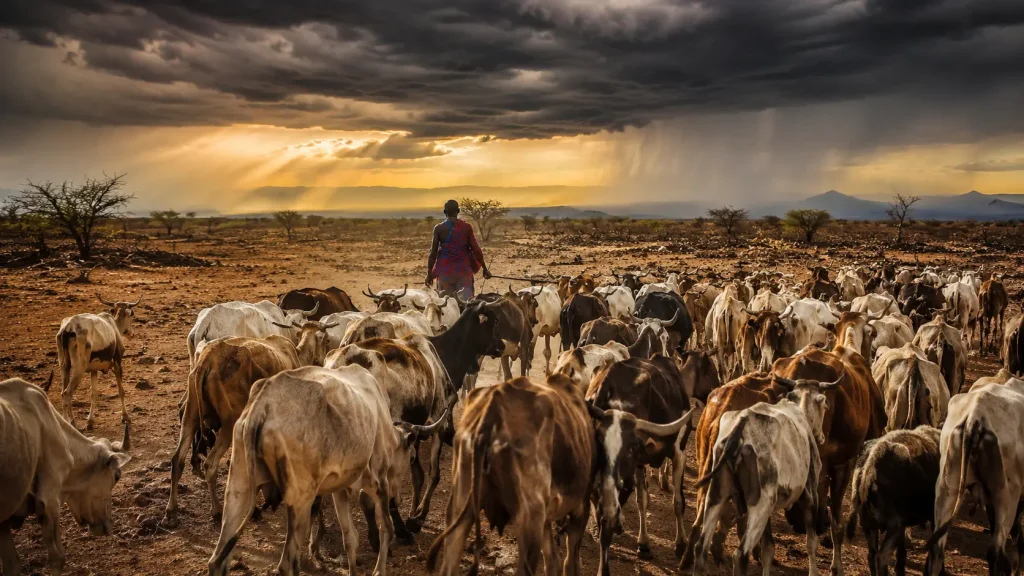
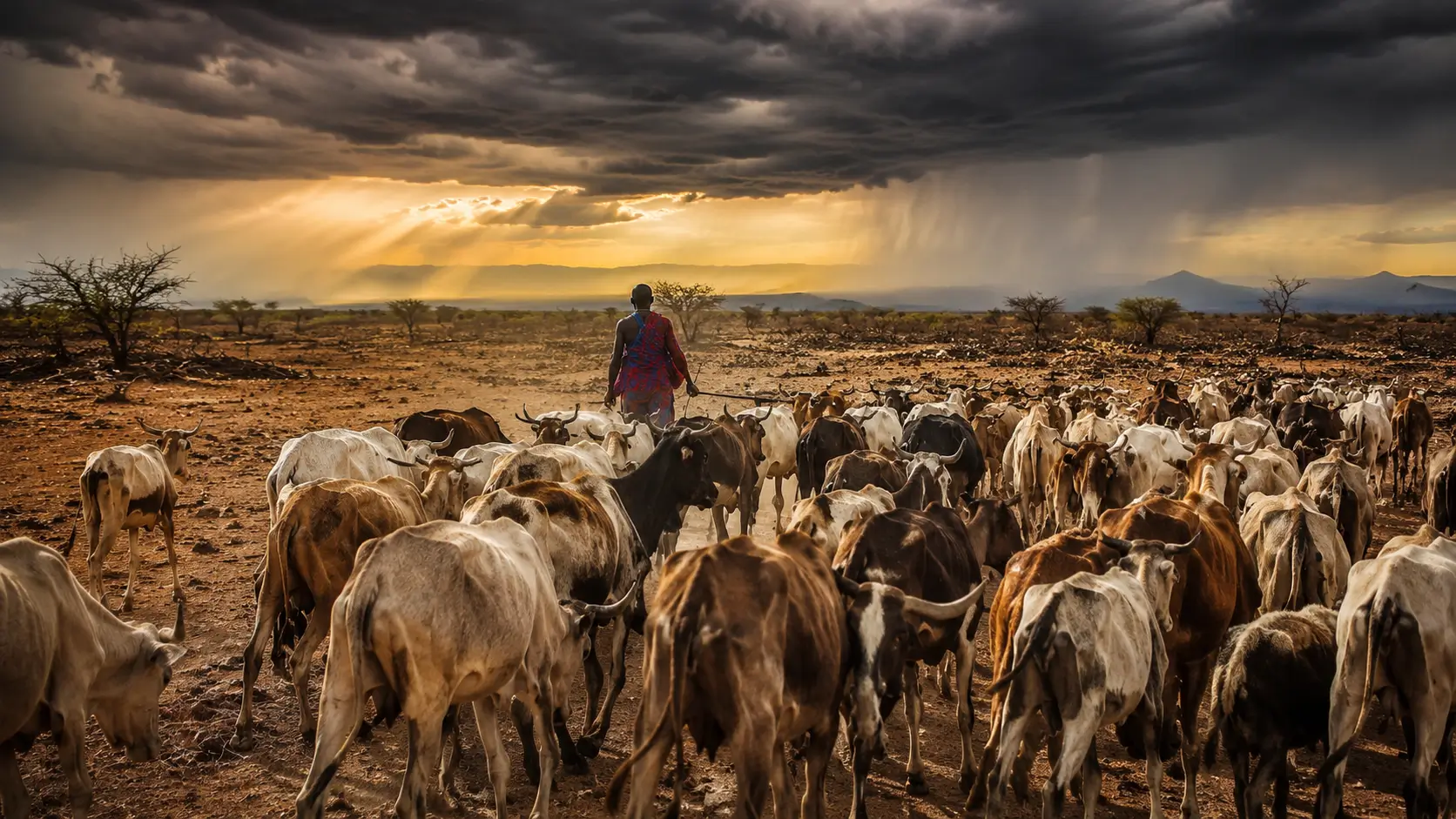
Through the drought that gripped the Horn of Africa from 2020 to 2023, the forecasts were not wrong. Failed season followed failed season, and each was called. Satellites tracked the vegetation as it thinned. The bulletins went out on time. And by November 2022, OCHA and the Food Security and Nutrition Working Group were counting 9.5 million dead livestock across the region — 4 million in Ethiopia, 2.5 million in Kenya, over 3 million in Somalia — with a further 30 million weakened and at risk in Ethiopia alone.
We saw it coming and the herds died anyway.
That is not a forecasting failure. It is a failure of what the forecast is wired to trigger.
This week in Addis Ababa, UNDRR, the African Union Commission, WMO, ITU and IFRC have been working through how to place every person on this continent under a multi-hazard early warning system by 2027. In Kigali, the Africa Food Systems Forum closes its twentieth edition tomorrow, after four days largely spent debating where agricultural capital should go. I want to put a single question to both rooms, because it sits between them and has been claimed by neither: when the drought warning fires, what is supposed to happen to the animals?
In most national protocols, the honest answer is nothing. The warning moves people, pre-positions food aid, opens water points for households. They count the livestock afterwards as a loss. They enter the record as a compensation line, valued at replacement cost, some months after the carcasses have been cleared.
What that accounting misses
Start with the scale of what is being written off. Speaking at the first Africa Pastoral Markets Forum in Addis this July, AU-IBAR put pastoral systems at more than 268 million pastoralists and agro-pastoralists, with livestock contributing close to a quarter of agricultural GDP in sub-Saharan Africa and between 30 and 80 per cent of agricultural value added in several member states. Kenya’s government costed its own drought livestock losses at over 1.5 billion US dollars.
Now the loss column cannot hold. Those 9.5 million animals took roughly 120 million litres of milk out of the system, which FAO translated into 1.6 million children under five losing their daily glass of it. A pastoralist household needs about five years to rebuild a herd from what survives. Compensation, when it arrives, arrives into a household that has already sold its breeding stock, pulled a child out of school, and started walking.
And there is a second cost, which my own training keeps in front of me. I came into this work through veterinary public health and meat inspection, and what you learn on an inspection floor is that a stressed, emaciated, immunosuppressed animal moving through a distressed market is not only a welfare problem. It is a disease problem wearing a welfare problem’s clothes. Drought-driven distress sales concentrate weakened animals in crowded market chains with collapsed veterinary oversight, at precisely the moment when surveillance budgets are being redirected to the human emergency. We have built a continental early-warning architecture that watches the sky and largely ignores the ground.
The mechanism already exists.
Here is why I think this is solvable, not merely regrettable.
Index-based livestock insurance has been running in northern Kenya and southern Ethiopia since around 2010, through the Kenya Livestock Insurance Programme and more recently the World Bank’s DRIVE facility. It uses the same satellite vegetation data as early warning systems. What makes it interesting is the design logic: the payout is deliberately triggered early in the dry season, before mortality, so that a household can buy fodder, water and veterinary services and keep the animals alive. Not compensation for a dead herd. Finance for a living one.
That is animal welfare functioning as disaster risk reduction, and it is not theoretical — the research base includes evidence that uptake raises household income and lowers exposure to downside risk, and separate work finding that IBLI rollout reduced drought-driven conflict, partly through easing migratory pressure.
The problem is reach. Recent survey work in Marsabit found adoption sitting at around 10 per cent, in a county where drought drives more than half of all livestock deaths. We have a proven anticipatory mechanism covering a tenth of the people who need it, running alongside a warning system being scaled to reach everyone by 2027. Those two facts should not sit in separate ministries.
Three things that would change the picture
Make the warning trigger a veterinary response. Every national multi-hazard early warning protocol drafted under EW4All should specify what animal-side action a drought alert initiates: strategic feed and water reserve release, emergency vaccination, supported early offtake at fair prices rather than distress sales. If the protocol does not name the action, the alert will keep arriving at a household with nothing attached.
Put animal health indicators into NDCs and NAPs, with numbers. Not welfare language in a preamble. Measurable indicators — herd mortality during declared drought, veterinary service coverage in arid and semi-arid lands, insured livestock units — because indicators are what climate finance windows can actually disburse against.
Use the mandate we already have. The Kampala CAADP Declaration came into effect on 1 January 2026 and commits member states to strengthened animal disease surveillance, expanded vaccine production, PPR eradication by 2030, and improved livestock nutrition. The instruments are signed. What is missing is the connective tissue between those commitments and the DRR architecture being built in parallel down the corridor.
To the delegates in both cities
The tension between development pressure and environmental limits is real, and I am not going to pretend a welfare frame dissolves it. But treating animals as the residual category, the thing counted after the emergency rather than protected during it, is a choice we make in the drafting, and it can be made differently in the next draft.
A warning that reaches a pastoralist three days before the drought breaks, and offers her nothing to do for her animals, is not an early warning. It is advance notice of a loss. We can do better than that by 2027, and the mechanisms are already in our policy instruments, waiting to be connected.
Sources
- OCHA / FSNWG, Horn of Africa Drought: Regional Humanitarian Overview & Call to Action, 28 November 2022 — livestock mortality figures, Kenya economic cost, milk and child nutrition figures, herd rebuilding timeline.
- AU-IBAR, remarks at the First Africa Pastoral Markets Forum, Addis Ababa, 13–17 July 2026 — pastoralist population, livestock share of agricultural GDP and value added.
- UNDRR, Africa Early Warnings Forum, Addis Ababa, 2–4 September 2026; Early Warnings for All (EW4All) initiative, 2027 target.
- African Union, Kampala CAADP Declaration on Building Resilient and Sustainable Agrifood Systems in Africa, adopted 11 January 2025, in effect 1 January 2026; CAADP Strategy and Action Plan 2026–2035.
- ILRI / IBLI programme documentation; Shikuku et al., “Preferences for Bundled Index-Based Livestock Insurance: Evidence From Northern Kenya,” Agricultural Economics (2026) — adoption rates, drought share of livestock losses, payout design logic.
- Africa Food Systems Forum 2026, Kigali Convention Centre, 31 August – 4 September 2026.